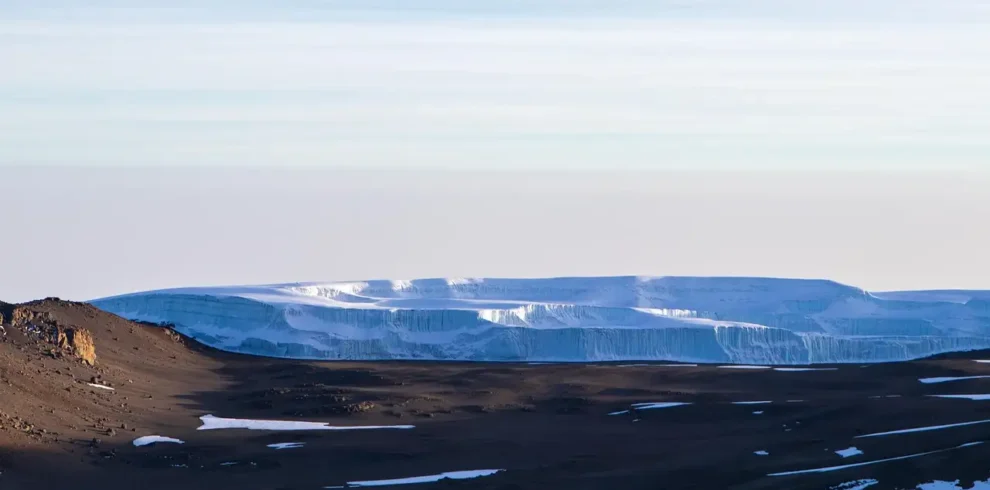
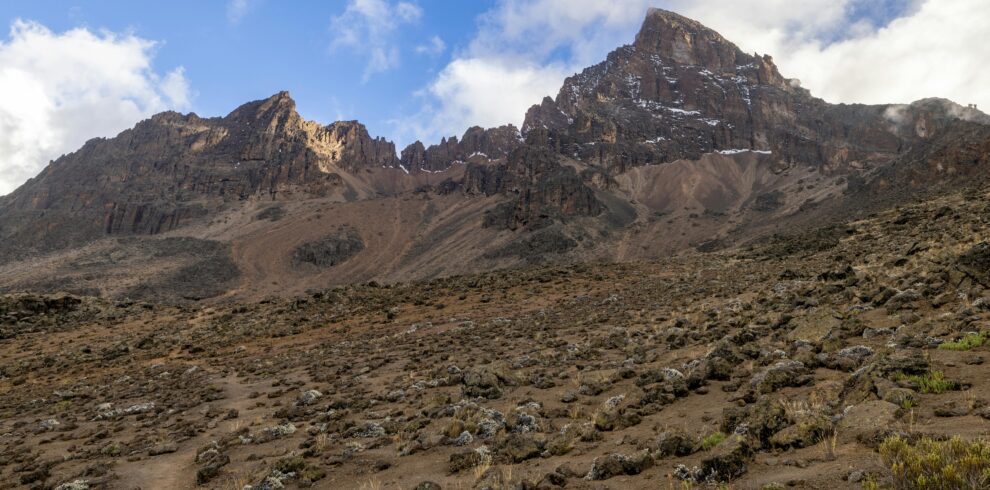
Overview
The Marangu Route, often called the “Coca-Cola Route” is favored for its shorter duration and the convenience of permanent huts at each campsite.
The final ascent from Kibo Hut is steep, passing Gilman’s Point en route to Uhuru Peak. Due to its shorter itinerary and quicker elevation gain, acclimatization is limited, which can reduce summit success rates. It’s also the only trail where climbers use the same path for both ascent and descent, leading to heavier foot traffic.
Highlights
- Hut Accommodation – The only Kilimanjaro route with permanent sleeping huts (Mandara, Horombo, and Kibo), offering more comfort than tents
- Begins with a lush rainforest trek from Marangu Gate, with chances to spot colobus monkeys and tropical birds
- Acclimatization Day – Includes an extra day at Horombo Hut to help adjust to altitude, improving summit success
- Summit via Gilman’s Point – The final push from Kibo Hut passes Gilman’s Point before reaching Uhuru Peak at 5,895m
- Same Path Up & Down – Uses the same trail for ascent and descent, making it more crowded but easier to navigate
- Popular & Accessible – Known as the “Coca-Cola Route,” it’s one of the most popular and beginner-friendly options
Itinerary
- Elevation:1905m/6250ft to 2723m/8934ft
- Altitude Gained:818m
Departing from Moshi a 1-hour drive will take you through the Village of Marangu to the Kilimanjaro National Park Gate. We will patiently wait for our permits to be issued while watching the hustle and bustle of operations as many crews prepare for the journey ahead Enjoy the beautiful rainforest scenery and windy trails while your guide tells you about the local flora and fauna and natural wildlife. At these lower elevations, the trail can be muddy and quite slippery. We highly recommend gaiters and trekking poles here.
- Elevation:2723m/8934ft to 3721m/12,208ft
- Altitude Gained: 998m
After a good night's sleep and a hearty breakfast, we emerge from the rain forest and continue on an ascending path through heathland, looking for giant lobelias and groundsels. Continue up into open moorlands where small shrubs are the main vegetation. Stop halfway for lunch to enjoy amazing views of Mawenzi. Arrive at the Horombo Huts late afternoon beneath the spectacular Kibo Summit viewpoint. Temperatures begin to drop.
You can spend a full day and a second night at Horombo. On this day, you can either rest at the huts or take a stroll up to the Mawenzi base camp then return to the Horombo Huts. This extra day will help your acclimatization, and further your understanding of the mountains weather and altitude. After your pause, you will continue up to the Kibo Huts on your fourth day for your midnight start to the summit.
- Elevation:3721m/12,208ft to 4714m/15,466ft
- Altitude Gained: 993m
After breakfast, we continue on through the dwindling heathland that blends into a moonscape as you enter the sweeping saddle connecting Mawenzi and Kibo. Here while we stop for lunch, and later when you cross this surprisingly large saddle, you can examine the summit climb up Kibo that you will be starting in just a few hours.
- Elevation:4714m/15,466ft to 5895m/19,341ft
- Altitude Gained: 1181m
- Descent To:3721m/12,208ft
- Altitude Lost: 2174m
Excitement is building as morning comes with an early start between midnight and 2 a.m. This is the most mentally and physically challenging portion of the trek.
We continue our way to the summit in a switchback formation through trying to stay warm and focused on the amazing sense of accomplishment that lies ahead. With a switchback motion, we ascend through heavy scree and possibly snow towards Gillman’s Point on the crater rim. You will be rewarded with the most magnificent sunrise during your short rest here. Faster hikers may view the sunrise from the summit. From here on your remaining 1 hour ascent to Uhuru Peak, you are likely to encounter snow all the way. Congratulations, one step at a time you have now reached Uhuru Peak the highest point on Mount Kilimanjaro and the entire continent of Africa! After photos, celebrations and maybe a few tears of joy we take a few moments to enjoy this incredible accomplishment. We begin our steep descent down to Mweka Camp, stopping at Barafu for lunch and a very brief rest. We strongly recommend gaiters and trekking poles for uncooperative loose gravel and volcano ash terrain. Well-deserved rest awaits you to enjoy your last evening on the mountain. Overnight Mweka Camp.
- Elevation:3721m/12,208 to 1905m/6250ft
- Altitude Lost: 1816m
After breakfast and a heartfelt ceremony of appreciation and team bonding with your crew, it’s time to say goodbye. We continue the descent down, stopping at the Mandara Huts for lunch. Remember to tip your guides, cooks, and porters, since you will be leaving them here. You return back to the Marangu Gate and receive your summit certificates. As the weather is drastically warmer, the terrain is wet, muddy, and steep, and we highly recommend gaiters and trekking poles. From the gate, a vehicle will meet you to drive you back to your hotel in Moshi (about 45 minutes). Enjoy a long overdue hot shower, dinner, and celebrations!!
Cost
The Cost Includes
- All transfers are as per the itinerary and government expenses.
- One night accommodation at the hotel in Arusha/Moshi.
- All Kilimanjaro Park fees.
- Trained guides in altitude physiology and wilderness first responder (WFR).
- Top-quality food for the duration of the climb, considering maximum nutritional needs. Three meals a day.
- Safety equipment, including an oxygen tank and portable altitude chamber (PAC) for the entire climb. Camping equipment, including top-quality mountain tents and standard bathroom facilities.
- Safety communication, such as satellite phones and cell phones.
- Flying Doctors evacuation within the area.
- Day room on the last day at the hotel in Arusha/Moshi.
- Mattresses and tents.
The Cost Excludes
- International flights (From/to your home country)
- Tips for your guide, cook and crew.
- Personal items (Souvenirs, travel insurance, visa fees, etc.)
- Government-imposed increase of taxes and/or park fees
- Extra accommodation before and after tour
- Extra activities not mentioned on the itinerary
- Beverages, laundry, personal gear or clothing rental, etc.
- Any charges resulting from an early descent, such as additional hotels, transfers, etc. (This applies if a guest descends before finishing the climb.)
FAQs
Only huts! Marangu is the only Kilimanjaro route with permanent sleeping huts—Mandara, Horombo, and Kibo—offering more comfort than camping.
Yes, it’s considered one of the easiest and most accessible routes, ideal for first-time trekkers who prefer a less rugged experience.
Yes, Marangu uses the same path both ways, which simplifies logistics but can lead to more foot traffic.
The extra day at Horombo Hut allows for better acclimatization, increasing your chances of reaching the summit safely.
Waterproof clothing, warm layers, sturdy boots, and a good sleeping bag are essential. Most operators provide a full packing list.
The 6-day itinerary has a success rate of around 80%, thanks to the added acclimatization day.